
A bumper bracket looks like a small and simple part, but this is exactly the kind of item that is often ordered incorrectly. The same general name may refer to different brackets and guides, while visually similar versions can differ by just a few mounting points.
That is why it is better to rely not only on the part name, but also on the vehicle model, production years, facelift version, part number, and photos of the part itself. For Land Rover, Range Rover, and Jaguar, this is especially important because one model may have several bumper versions and several related mounting parts.
What helps the most when choosing a bumper bracket
- the vehicle model and production years;
- whether it is for the front or rear bumper;
- a photo of the old bracket or a photo of the mounting area;
- the number on the part, if it is still visible;
- the VIN, if there are still several possible options after checking the photos and number.
Why the part name alone is not enough
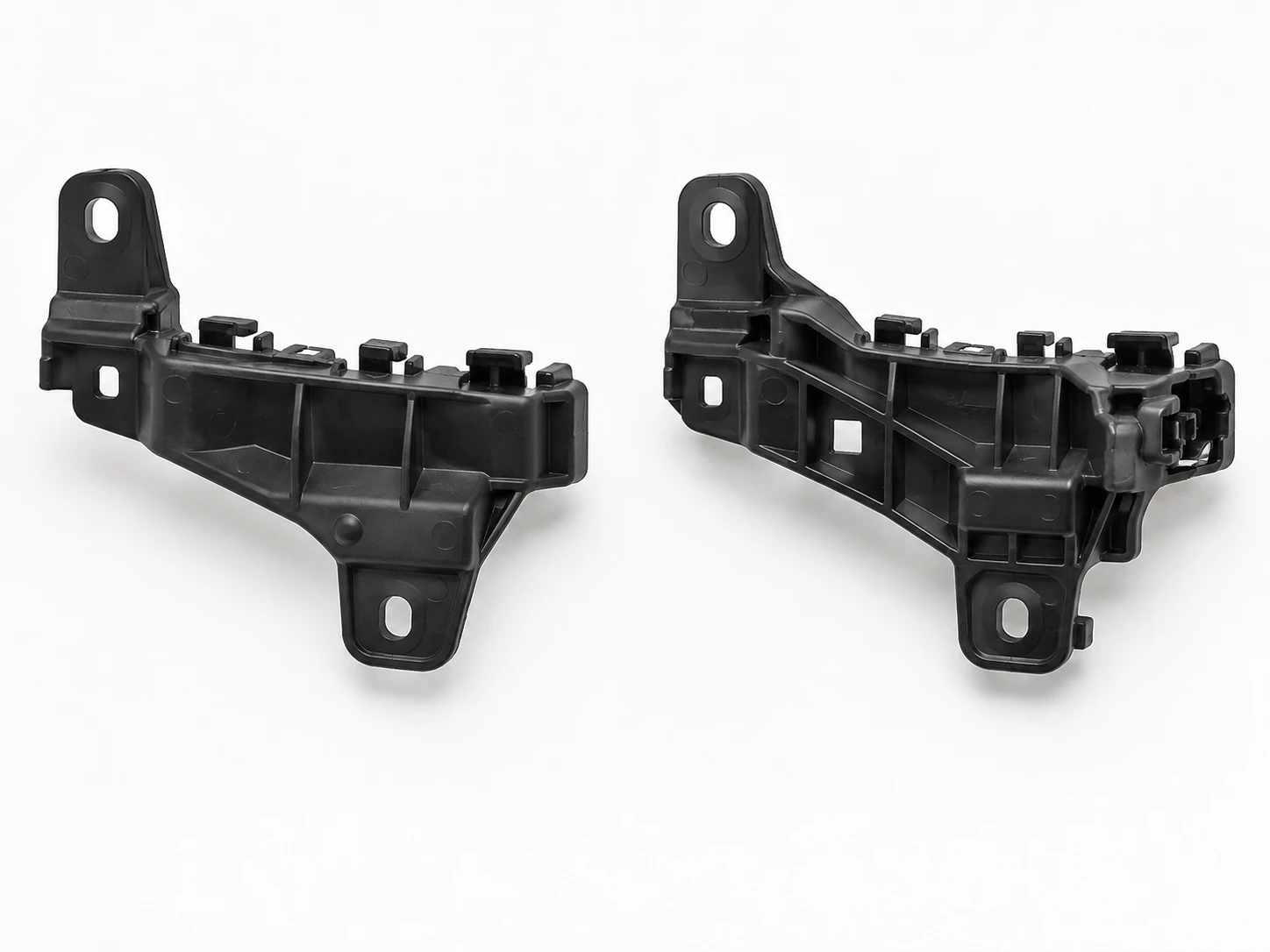
A request such as “front bumper bracket for Range Rover Sport” sounds clear, but it is not precise enough for a catalog. One bumper usually uses several different mounting parts: side brackets, guides, and other plastic pieces that control the fit and attachment of the bumper.
That is why a photo of the old part—or at least a photo of the mounting location—is usually much more helpful than trying to identify the correct part by a generic name alone.
When the facelift version really matters
Land Rover, Range Rover, and Jaguar models can remain in production for many years. After a facelift, the bumper, lighting, grilles, and nearby plastic components often change—and the bracket may change with them.
At the same time, the situation is not always the same. Some models do have separate brackets for the earlier version and for the facelift, while some part numbers fit the whole production range. That is why the safest approach is to check the actual applicability of the specific part number and compare the shape.
If the part still has a number on it
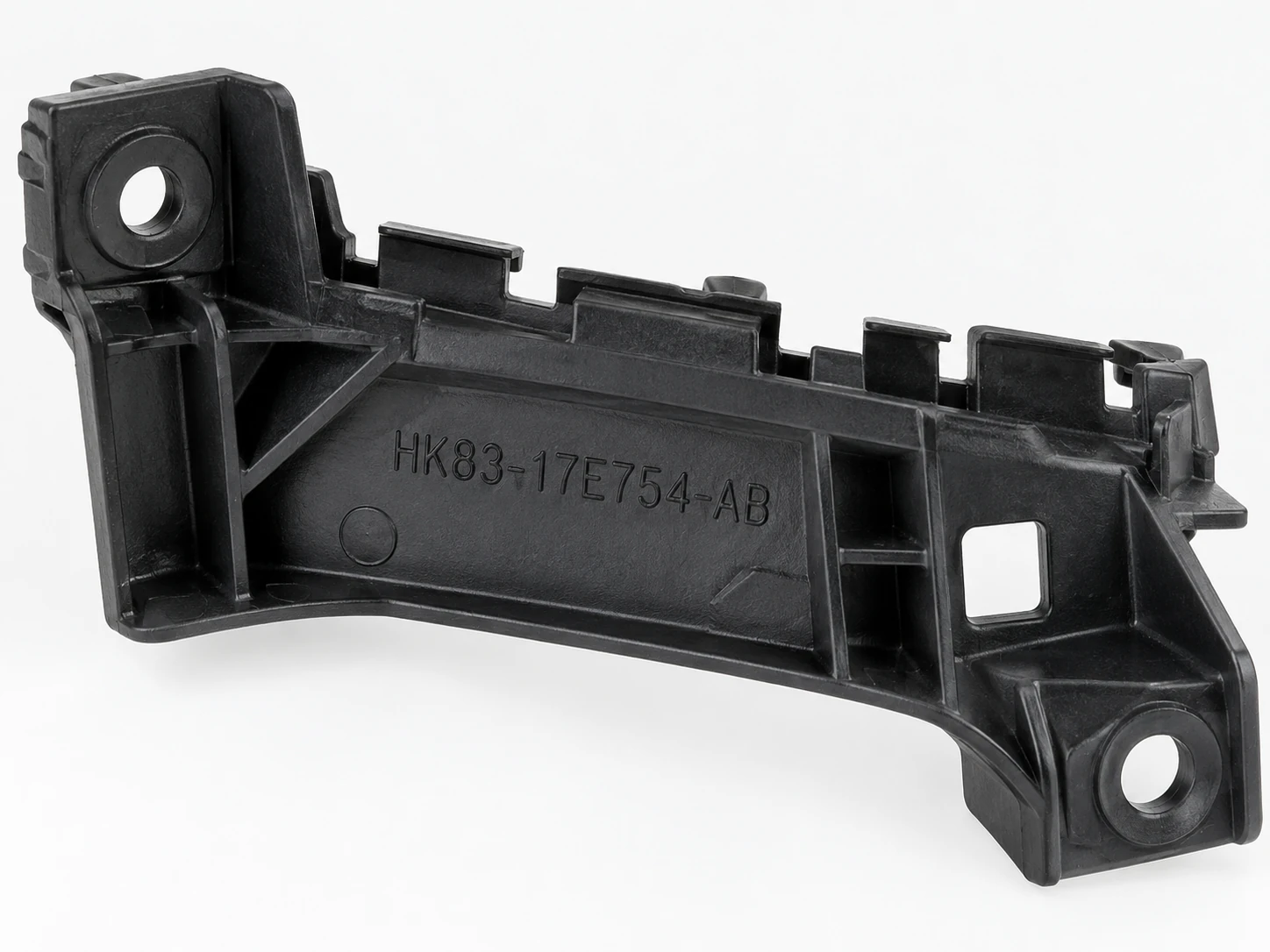
This is the best-case scenario. A plastic bracket may have an OEM number or an engineering number molded directly into the part. That number helps identify the bracket quickly, after which you can confirm the model, years, and facelift version.
If there is no number or it is hard to read
In that case, it is better not to rely only on a generic part name or on a small shop photo. Start with the information that can actually be checked:
- photos of the part from several angles;
- a photo of the mounting location on the vehicle;
- the vehicle model and production years;
- the VIN, if final confirmation is needed.
This set of information is much more useful than a vague request such as “I need a bumper bracket for a Jaguar.”
Quick answers to common questions
Can a bumper bracket be selected by photo only?
In many cases, yes—especially if the photo is clear and the bracket shape is visible. But if there are several very similar versions, the part number and VIN help confirm the right option.
Does a facelift always mean a different bracket?
No. Sometimes the bracket changes together with the bumper, and sometimes the same part fits the entire production range. That is why the applicability of the exact part number matters.
What should be sent for a proper selection?
First of all, a photo of the old bracket or a photo of the mounting area. If there is a number on the plastic, that should be sent too. The VIN becomes useful when there is still doubt between several options.
Bottom line
A bumper bracket is a small part, but it should not be selected by the general name alone. It is much safer to use photos, the number on the part, the vehicle model, the production years, and the facelift version. If final compatibility needs to be confirmed, the VIN helps.
If you already have a number or want to browse similar items, start with the LandMotion auto parts catalog. And if you want to better understand when the VIN is needed and how part numbers work, see our article about auto parts selection by VIN.